Village Green or Community Hall for a Casual Gathering
Village green or community hall? Compare weather, access and the pace of a countryside pastime to choose a comfortable setting for your group.
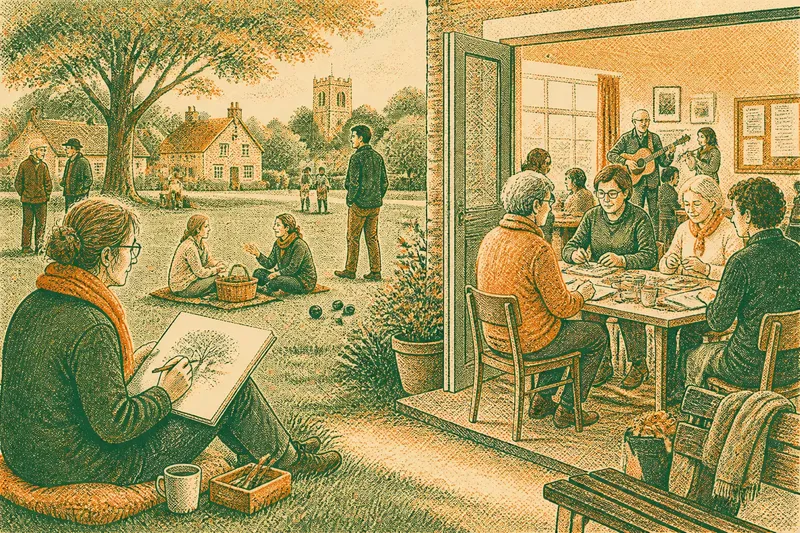
Should a casual countryside gathering meet on the village green or in the community hall? For a pastime such as sketching, bowls or sharing a picnic, the right place depends on how people will arrive, take part and cope with the weather.
Match the pastime
A village green suits activities that can pause and restart without fuss. Neighbors can sketch a line of trees, play a gentle game or share a picnic, while latecomers watch for a moment before joining. The open setting also leaves room for a short walk or a quiet conversation at the edge.
A community hall works well when people need a shared surface or a clear center of attention. Board games, mending, craft work and a small folk-music session are easier to arrange around tables and chairs than on grass. Indoors, conversation and instructions are less exposed to wind and passing village noise.
Neither venue is automatically more sociable. The green makes observing and coming and going feel natural; the hall makes it easier to focus on the same activity. Pick the setting that suits the kind of company the group actually wants.
Outdoor comforts
On the green, the view and the ordinary movement of village life can be part of the afternoon. A pause need not be filled with another activity; the surroundings are doing their quiet share of the hosting.
Wind, damp ground and changing light can complicate plans. Loose paper may blow about, and delicate craft materials can become awkward to manage. A walk-and-talk may suit a breezy day better than cards or detailed instructions.
Consider who needs a bench, a sheltered edge or an easy route back to a bus stop or car. Check whether nearby facilities are available, and make the expected length of the gathering clear. The aim is not to make the outdoors behave like a room, but to choose a pastime that fits outdoor conditions.
Hall arrangements
A hall provides a stable place for chairs, cups, notebooks and shared materials. Newcomers can see where to enter and settle, which helps when not everyone knows one another.
Furniture affects the mood. A loose ring of chairs invites conversation; tables suit drawing, games or crafts. Leave a seat near the edge for someone who would rather watch before joining. A row of chairs facing one direction, by contrast, can make a relaxed gathering feel like a talk.
Ask about access, opening arrangements, storage and any conditions attached to using the hall. Local arrangements vary, so check with the venue before inviting people. If guests will bring coats, bags or equipment, make sure there is a sensible place to put them rather than a traffic jam at the door.
Company and pace
A green can suit neighbors who prefer an informal arrival or do not want to stay for the whole gathering. Someone can watch, take a short walk and return without interrupting the group. That flexibility is useful for an unhurried country pastime where the company matters as much as the activity.
A hall can make quiet participation easier when a shared table gives people something to focus on. Enclosure can also feel socially demanding if everyone is expected to take part at once. A host can make the room gentler by leaving space for observation and saying plainly that watching is welcome.
Imagine a few neighbors planning a sketching afternoon. Their starting point is a group with staggered arrivals, pencils and paper, and a wish to draw the trees as well as talk. They choose the village green, tell guests to bring a cushion if they want one, and name a nearby hall as the damp-weather alternative; if rain threatens, they move indoors and set the tables by a window. The result is a clear choice: the green favors flexible arrival and the view, while the hall trades some outdoor atmosphere for shelter and a steady surface.
Choosing a venue?
What suits a village green?
Choose a pastime that can tolerate interruptions, uneven ground and changing attention, such as sketching, a gentle game or a picnic. If it depends on detailed instructions or loose materials, look for shelter or use a hall.
When does a community hall fit better?
A hall is useful when the group needs tables, stable surfaces, clear conversation or shared materials. It also suits an activity that works best when everyone stays near the same center.
How can an outdoor gathering feel comfortable?
Choose a spot with somewhere to sit and enough room not to block paths. Tell guests where to meet, what to bring and whether there is an indoor alternative, so they can decide what suits them.
Can the venues work as a pair?
Yes, if the activity can shift indoors and the group knows the fallback plan before setting out. Use the hall for shelter and a table, and the green for open space, views or a walk between conversations.
A clear choice
- Check whether the pastime needs a table or firm surface; if it does, choose the hall, otherwise consider the green.
- Check whether wind could scatter paper or disrupt instructions; if it could, choose a sheltered spot or the hall, otherwise keep the outdoor plan.
- Check whether guests will arrive at different times; if they will, favor the green for easy comings and goings, otherwise either venue may suit.
- Check whether anyone needs a bench or a short route to transport; if those are available by the green, consider it, otherwise ask the hall about access and seating.
- Check whether the activity needs shared materials; if it does, choose the hall when it can provide a suitable table, otherwise simplify the materials or meet outside.
- Check whether the hall permits the planned use and has room for coats and bags; if it does, use it as a reliable indoor option, otherwise choose another suitable venue or keep the gathering outdoors.
- Check whether the green has a practical damp-weather alternative; if it does, tell guests where the gathering will move, otherwise choose the hall when the forecast makes outdoor comfort doubtful.
For the village green or community hall decision, describe the practical details in the invitation: meeting point, seating, what to bring and what happens if conditions change. That small courtesy lets guests arrive prepared, and leaves the afternoon free to remain an afternoon rather than becoming a venue committee meeting.